TL;DR: AI has changed advertising forever, but not all AI solutions are created equal. This guide breaks down AI tools, AI-powered services, agencies, and a new category called Creative Production Systems, helping marketing leaders understand what actually scales performance in 2026 and beyond.
What Is AI Advertising?
AI advertising refers to the use of artificial intelligence to support, automate or enhance parts of the advertising process - from research and ideation to creative production, optimisation and reporting.
In 2026, AI will no longer be experimental. It is embedded across modern marketing teams, not as a novelty, but as operational infrastructure.
The real shift is not what AI can do, it’s where it sits in the workflow.
How AI Changed Advertising (2022–2026)
In early 2024, AI was limited to early adopters and niche use cases. Most performance teams were still operating with:
- Manual creative workflows
- Long agency turnaround times
- Fragmented tool stacks
By 2026, every serious marketing organisation uses AI somewhere in its stack:
- Customer research
- Creative ideation
- Asset generation
- Editing and resizing
- Creative analytics and reporting
The best teams aren’t just adding AI tools. They’re rebuilding their workflows around creative velocity.
AI is no longer a sidekick. It has fundamentally reshaped how in-house teams, agencies, and marketers collaborate. Freeing teams from low-leverage tasks that once consumed over half of their working hours. Whilst most importantly, driving greater returns from the $ spent on advertising.
The AI Advertising Landscape (2026)
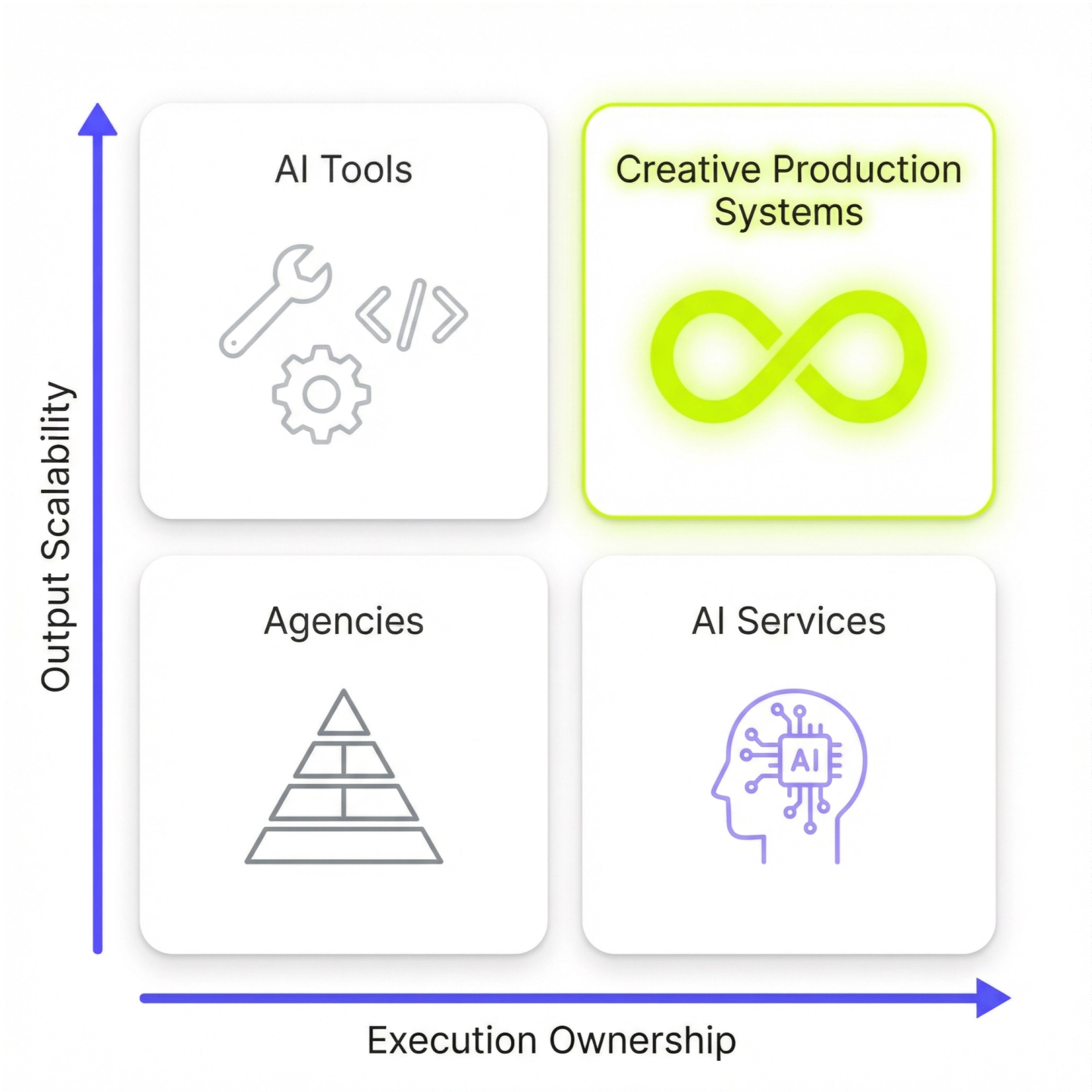
Today’s AI advertising ecosystem falls into four clear categories:
- AI Advertising Tools
- AI & Human Creative Services
- Agencies Using AI
- Creative Production Systems
Understanding the difference between these categories is critical - because they solve very different problems.
1. AI Advertising Tools
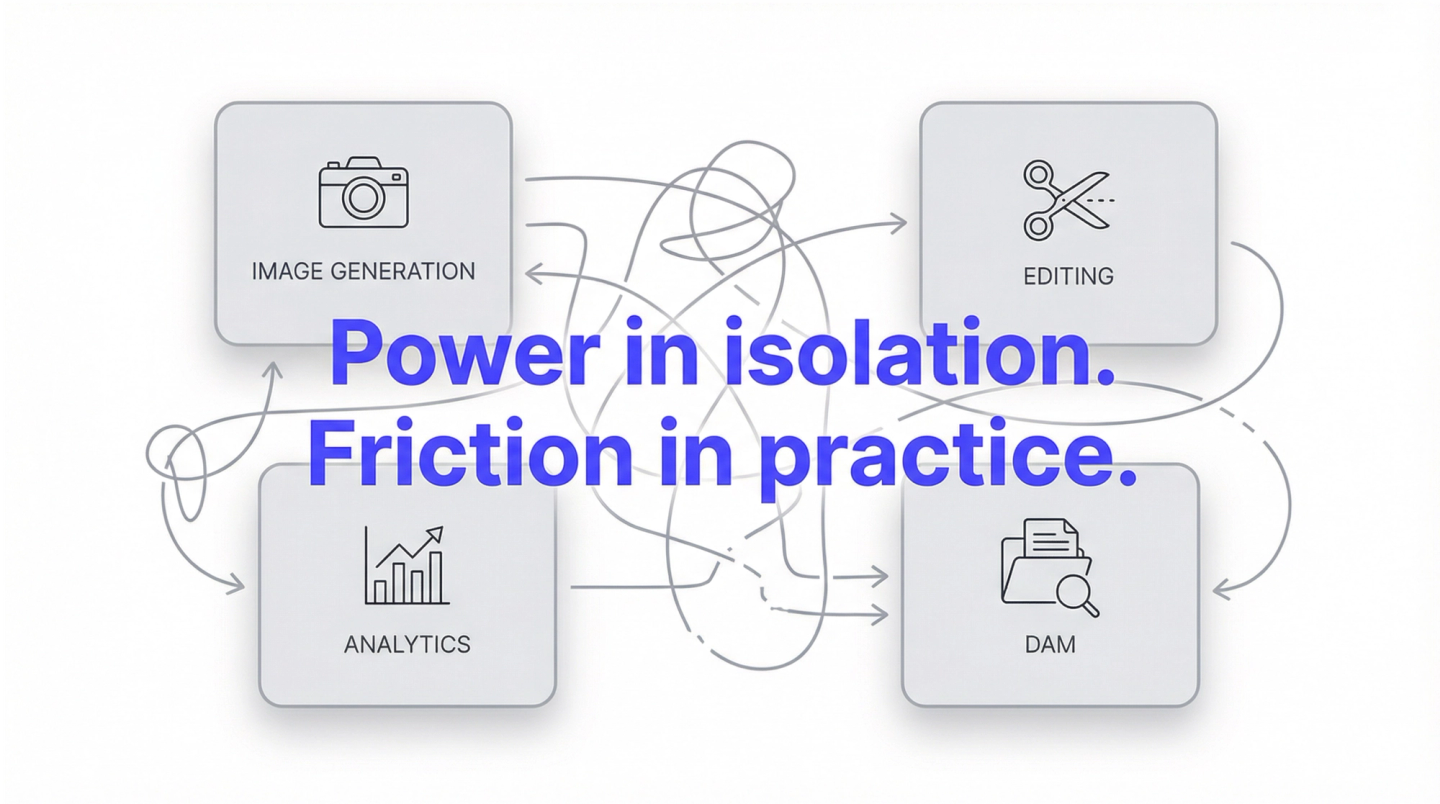
AI tools focus on a single task in advertising. They are usually self-serve, affordable, and powerful in isolation, but fragmented when used together.
Typical Cost Range
$0–$150 per tool, per user, per month
Most AI tools are inexpensive individually. In practice, performance teams rarely rely on just one. A typical stack includes an image generator, an editing tool, a DAM, and a creative analytics platform, often totalling $300–$800 per month across multiple subscriptions. Similar to streaming Netflix, fine by itself - but blink, and you’ve added Apple, Prime, Hulu and three others for $200 per month.
The primary cost is not software spend, but coordination cost: time spent switching tools, translating outputs, managing versions and manually connecting insights to execution.
Image & Video Generation Tools
What they do: Create AI-generated images or videos from scratch
Examples: Nano Banana, Sora, Kive, ChatGPT
Pros:
- Low cost
- Fast experimentation
- Accessible to non-designers
Cons:
- Not built for advertising
- Inconsistent quality
- Highly dependent on prompts and user experience
- Disconnected from brand and performance context
These tools are excellent for ideation, but rarely produce Meta-ready ads without significant manual work.
Editing Tools
What they do: Assemble clips and images into finished assets
Examples: CapCut, Descript, Instagram Edits
Pros:
- Fast execution
- Easy to learn
Cons:
- Templated outputs
- Easy to produce low-quality ads
- No opinion on performance
Editing tools speed up execution — they don’t solve what to make next.
AI Influencers & Synthetic Creators
What they do: Generate AI people to promote products
Examples: Arcads, Creatify, HeyGen
Pros:
- No filming or creator management
- Quick to deploy
Cons:
- Expensive per asset
- Variable quality
- Limited authenticity
- Trust erosion at scale
Digital Asset Management (DAM)
What they do: Store and organise brand assets using AI
Examples: Google Drive, Dropbox
Pros:
- Centralised storage
- Better than local folders
Cons:
- Separate from production
- Requires developer-led integrations (N8N)
- No link to ad performance
Competitor & Ad Intelligence Tools
What they do: Show ads run by competitors
Examples: Meta Ads Library, Foreplay
Pros:
- Inspiration
- Category awareness
Cons:
- Backward-looking
- Easy to copy without context
- No execution layer
Creative Analytics Tools
What they do: Analyse ad performance at the creative level
Examples: Motion, Blend AI
Pros:
- Clear insights
- Better UI than native platforms
Cons:
- Read-only
- No creation or iteration capability
The Core Limitation of AI Tools
AI tools are necessary but insufficient.
They optimise steps — not systems.
Teams still:
- Stitch together workflows
- Manage handoffs
- Translate insights into execution manually
This is where most performance bottlenecks live.
2. AI & Human Creative Services
These offerings combine AI tools with offshore or distributed human labour.
Typical Cost Range
$3,000–$12,000 per month
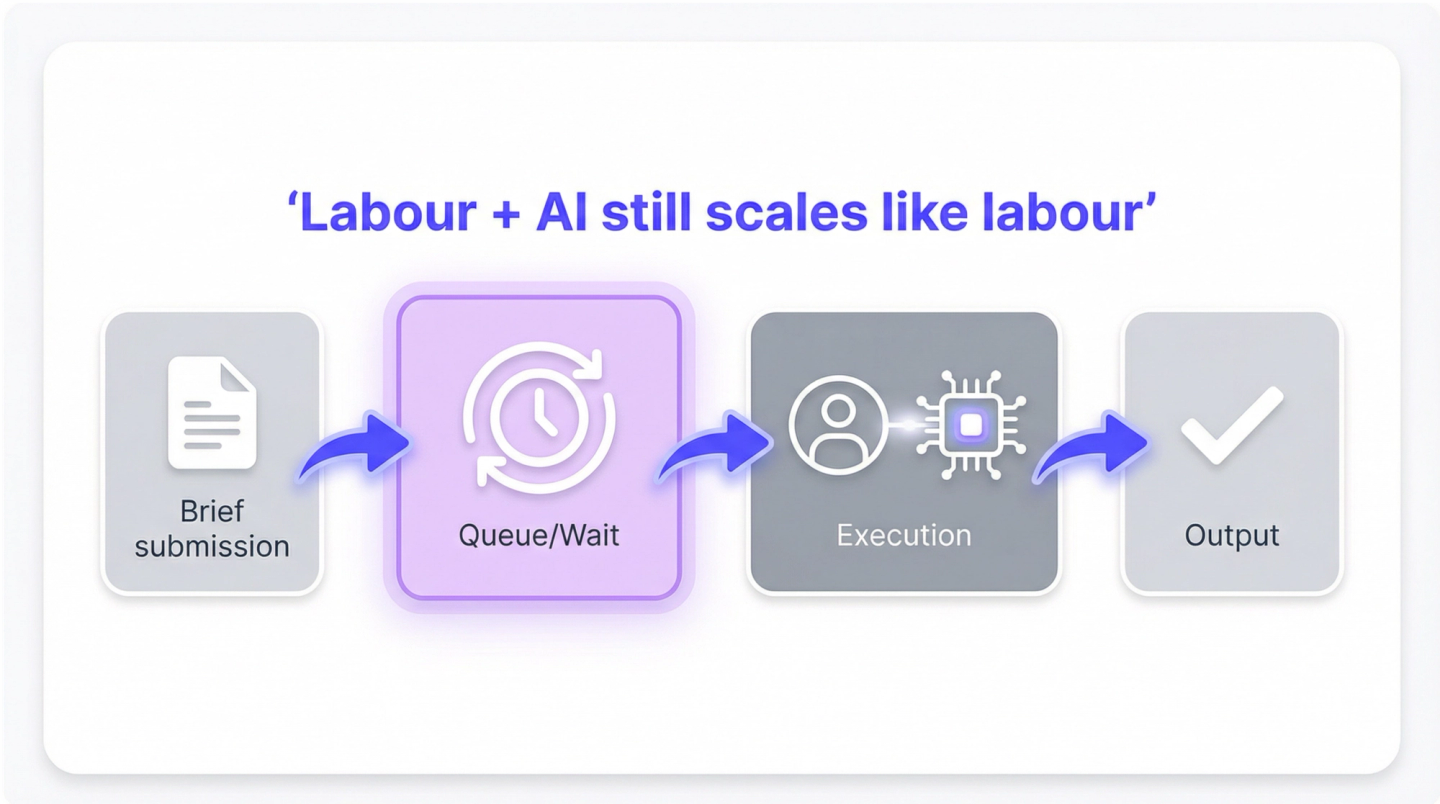
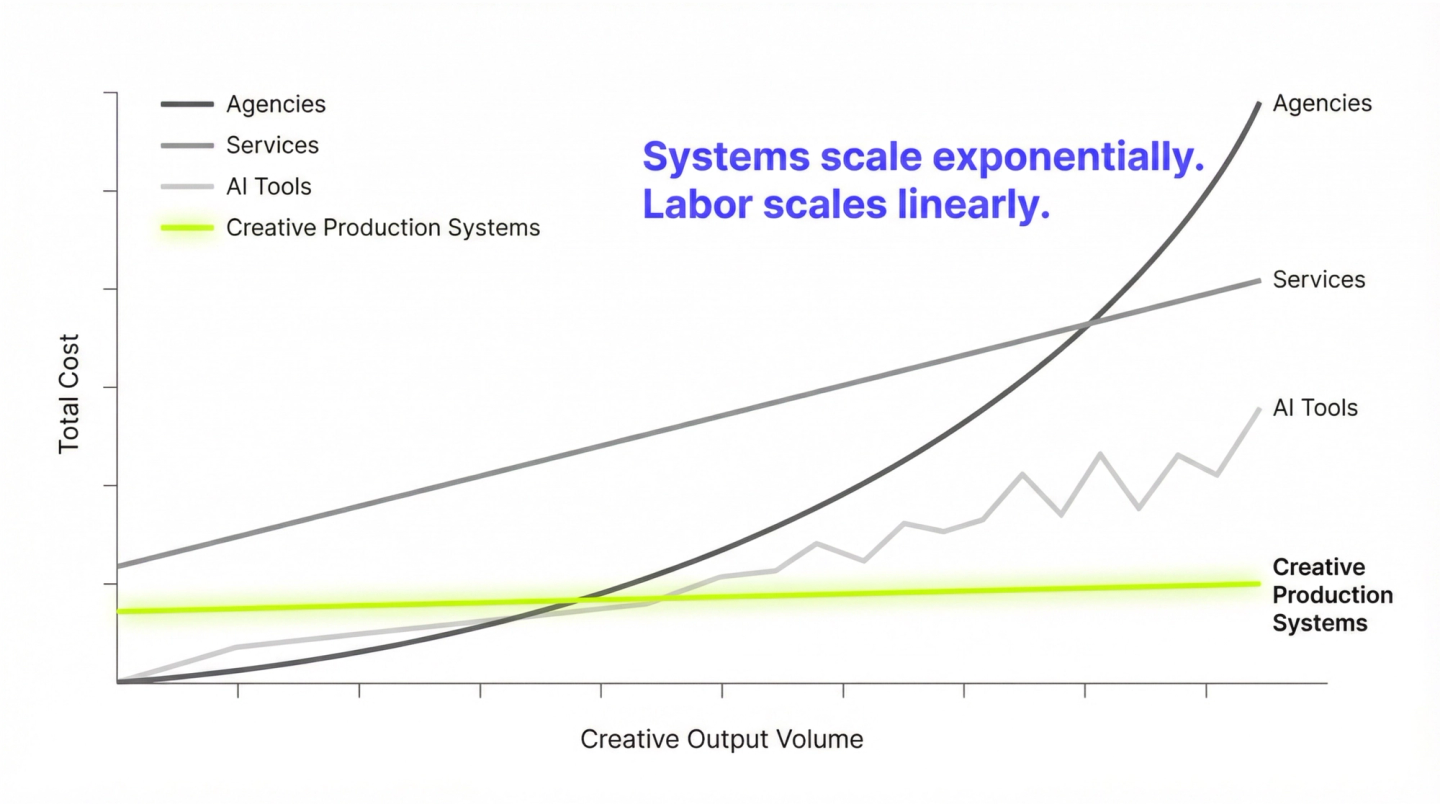
Pricing is driven primarily by human involvement - brief intake, review, project management, and revisions - rather than pure software. Output is usually capped by briefs, asset count or turnaround cycles. As creative volume increases, costs scale linearly with labour, not leverage.
Typical workflow:
- Brand submits brief
- Central team reviews
- Work is executed using AI tools
- Assets returned in 48–72 hours
- Feedback loop repeats
Examples: GetAds, Marketer.com, Smartly, Pencil
Pros:
- Done-for-you
- Predictable output
Cons:
- Slow iteration cycles
- Limited control
- Generic creative
- Expensive relative to output
These services replace agencies at the low end — but inherit the same structural limitations.
3. Agencies Using AI
Traditional agencies now use AI internally to improve margins and speed, while maintaining familiar pricing models.
Typical Cost Range
$8,000–$30,000+ per month (retainers)
$500–$2,000 per asset or concept
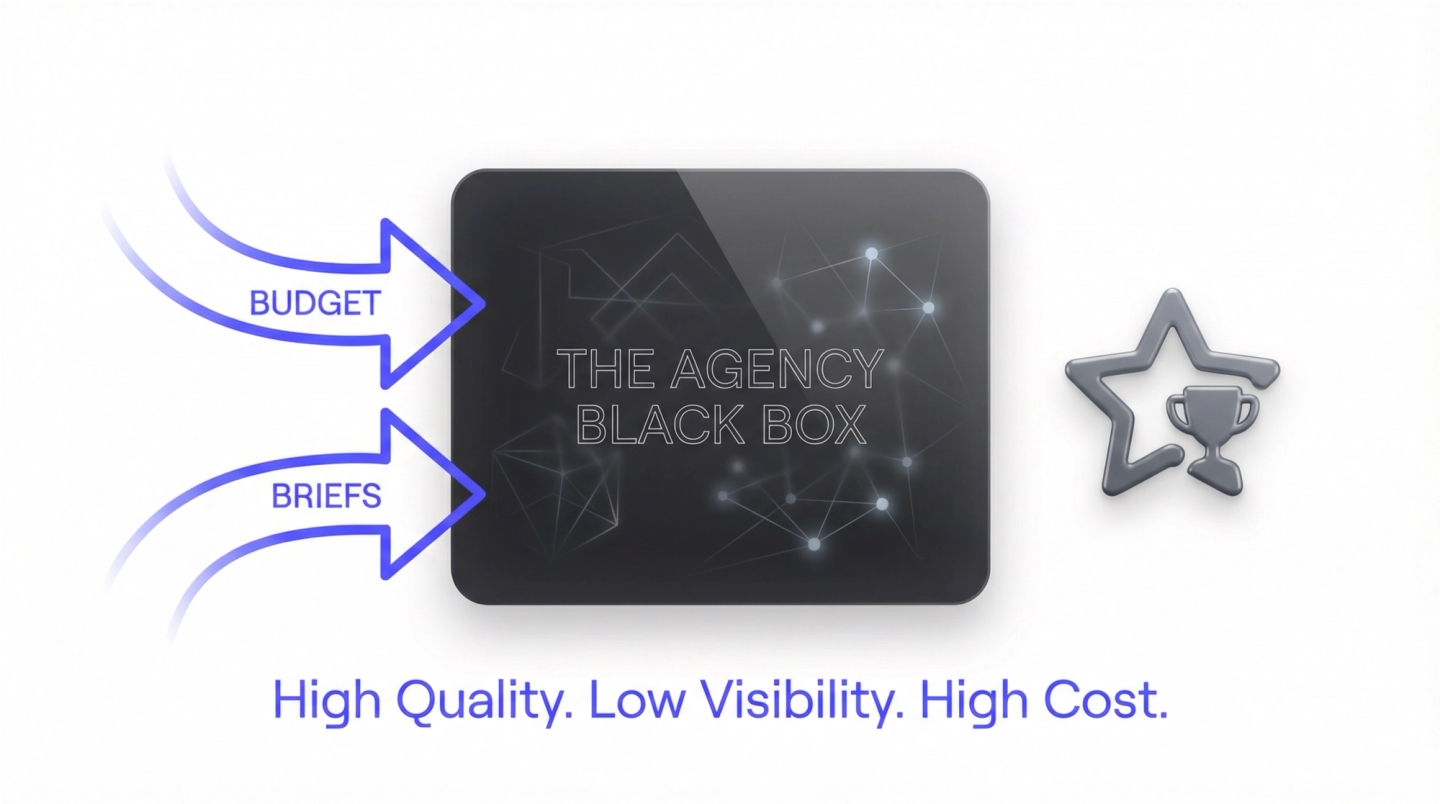
Agencies price on expertise, strategy and brand stewardship rather than output volume. While AI may reduce internal production time, those efficiency gains are rarely reflected in client pricing.
Pros:
- Strong strategic thinking
- High creative quality
Cons:
- Expensive
- Slow turnaround
- Opaque workflows
- Minimal client-side control
In many cases, brands are unknowingly paying premium prices for AI-generated outputs.
4. Creative Production Systems (The New Category)
Emerging in late 2025, Creative Production Systems represent a structural shift in how advertising creative is produced.
Typical Cost Range
Approximately one-fifth the cost of AI-managed services ($500-$1500 per month)
Creative Production Systems are priced as infrastructure, not labour. Costs are structured around platform access, usage, and support — allowing creative output to scale without increasing headcount or agency fees.
They are not tools. They are not services.
They are end-to-end creative production systems installed directly into teams, agencies, freelancers and in-house departments.
What Is a Creative Production System?
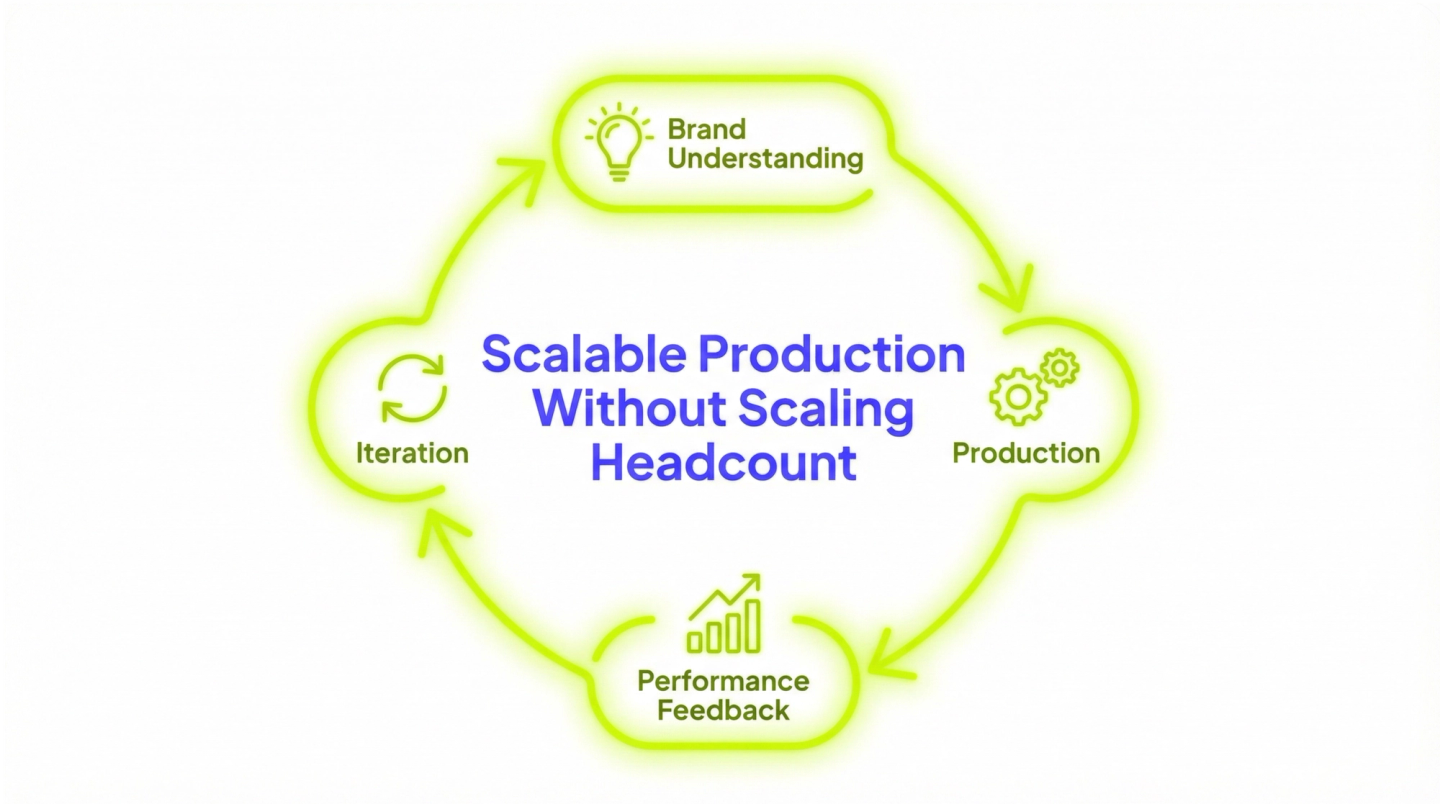
A Creative Production System:
- Automates creative production end-to-end
- Is trained on advertising best practices
- Is operated directly by the customer
- Connects creation to performance feedback
- Includes human support for workflow success
Who Leads This Category?
- Cuttable
Pros
- Predictable creative output
- High volume and variation
- Creates unlimited ideas
- Brand consistency at scale
- Performance-connected learning
- Scales without hiring
Cons
- Requires a shift from campaign thinking to systems thinking
- Not designed for one-off hero ads
- Requires flexibility in brand guidelines to drive performance
AI Advertising FAQs
What is the best AI for advertising?
The best AI depends on your constraints. Tools help with tasks. Services help with execution. Creative Production Systems solve scale, bottlenecks, time-scarcity and hiring limitations.
Are AI ads effective?
Yes — when produced with sufficient volume, variation and iteration speed.
Will AI replace agencies?
No. AI changes how creative is produced, not the need for strategy and taste. Creative Production Systems like Cuttable work as well for agencies as they do for brands.
What is a Creative Production System?
A Creative Production System is an automated platform that enables teams to produce, test and iterate advertising creative at scale — without scaling headcount.
How much do AI advertising solutions cost?
Costs vary by category. AI tools typically cost hundreds per month across a stack. AI-managed services range from several thousand to low five figures monthly. Agencies command premium retainers. Creative Production Systems shift spend to infrastructure, enabling scale at a fraction of service-based costs.
The Direction of Travel
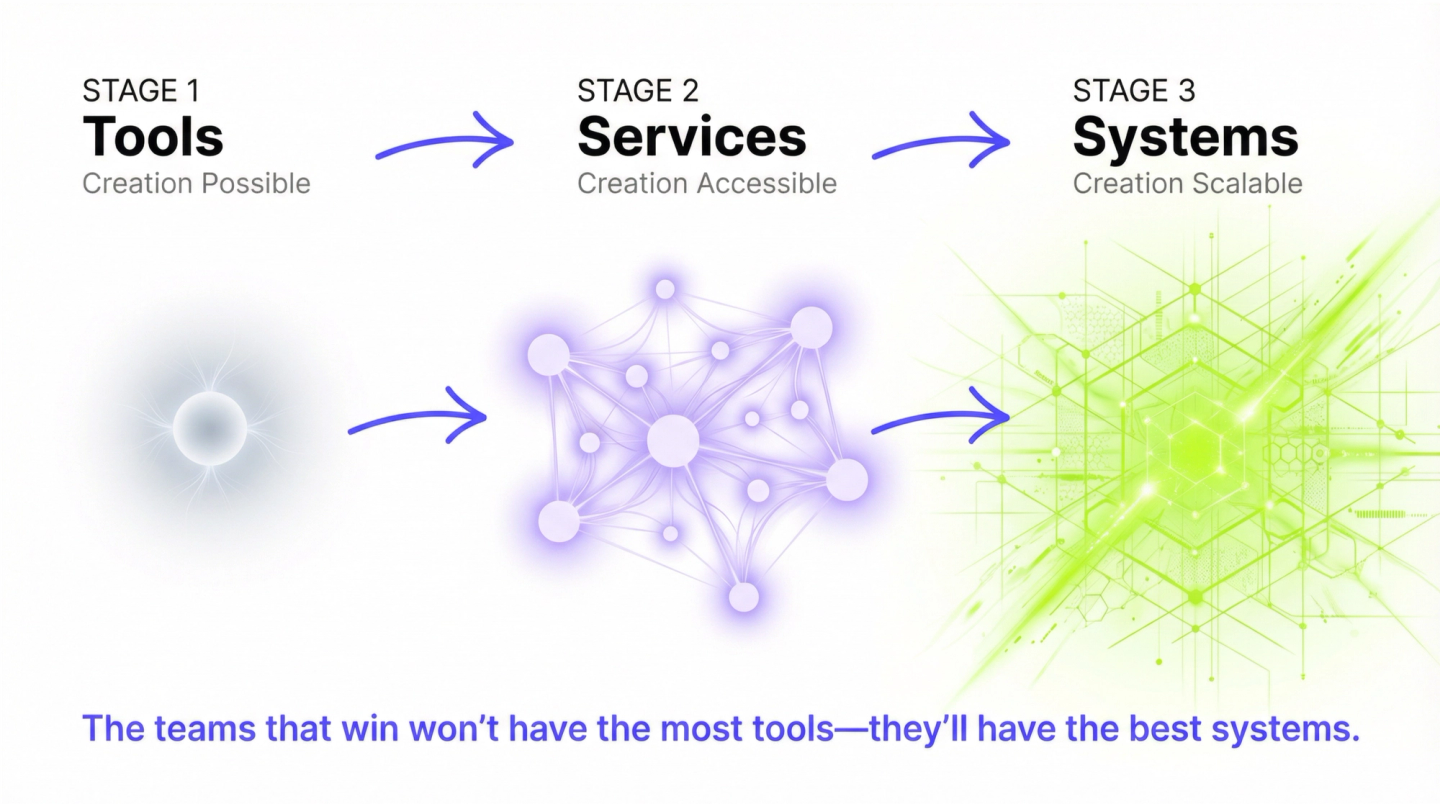
AI tools made creation possible.
AI services made creation accessible.
Creative Production Systems like Cuttable make creation scalable.
As performance marketing increasingly rewards volume, variation and velocity, the teams that win won’t have the most tools — they’ll have the best systems.
Cuttable is built for that future.